TRACE / CONTROL / RECOVER
MUSEUM PROVENANCE / CONTROLLED RECORDS
Secure Museum Provenance Records
Protect restricted artifact ownership records with controlled copies, minimized disclosure, verified authorized recipient handoff, tested recovery and documented retention—without confusing encryption with ownership duty or receipting accuracy.
EIGHT PROVENANCE-RECORD ROUTES
Follow each provenance record from collection to controlled retirement.
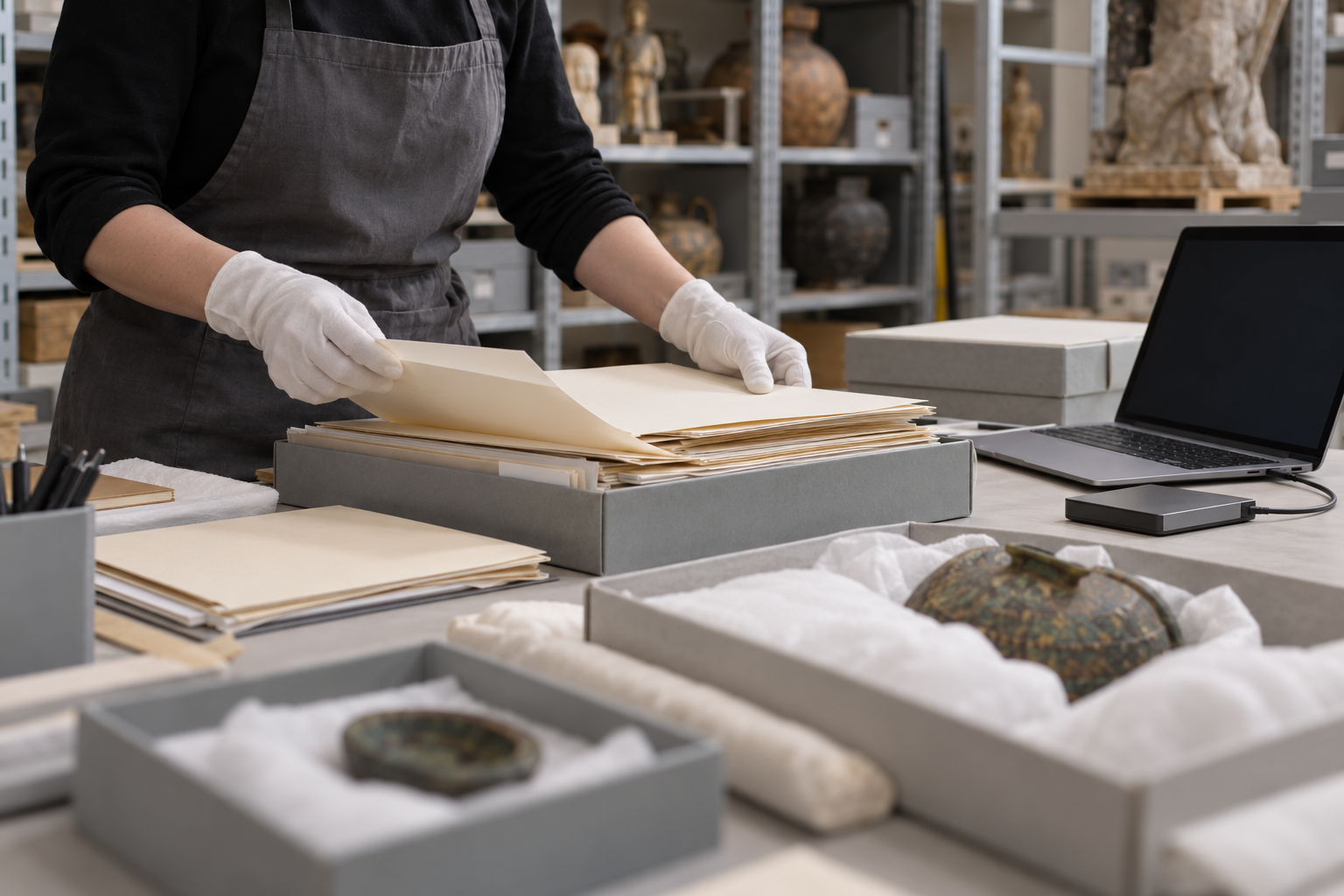
Each route addresses one provenance-record decision with a unique photograph, procedure and control boundary.
01Record ScopeScope Museum Provenance Records02Data CleanupClean Provenance Record Copies03Secure ArchiveBuild an Encrypted Provenance Archive04Recipient AccessShare Provenance Records Safely05Restore DrillTest Provenance Record Recovery06Retention PlanSet Provenance Record Retention07Access RepairFix Encrypted Provenance Access08Our RecommendationFolder Lock for Provenance Records
INTERACTIVE RELEASE CHECK
Is this provenance release packet ready for controlled research handoff?
Confirm scope, key separation, minimization, recipient authority, independent recovery and retention before release.